12+ Systems. Zero Unified Intelligence.
A typical fashion brand has wholesale data scattered across: ERP (SAP, Dynamics, Infor), showroom tool, order management system, reorder platform, CRM, spreadsheets, email threads, WhatsApp groups, and PDF reports. Each system holds a piece of the truth. None holds the complete picture.
The gaps between systems are where intelligence dies. A showroom interaction that never connects to the order. A sell-out signal that never reaches the preorder planner. A buyer preference that lives only in a sales rep's memory.
The Platform Solution
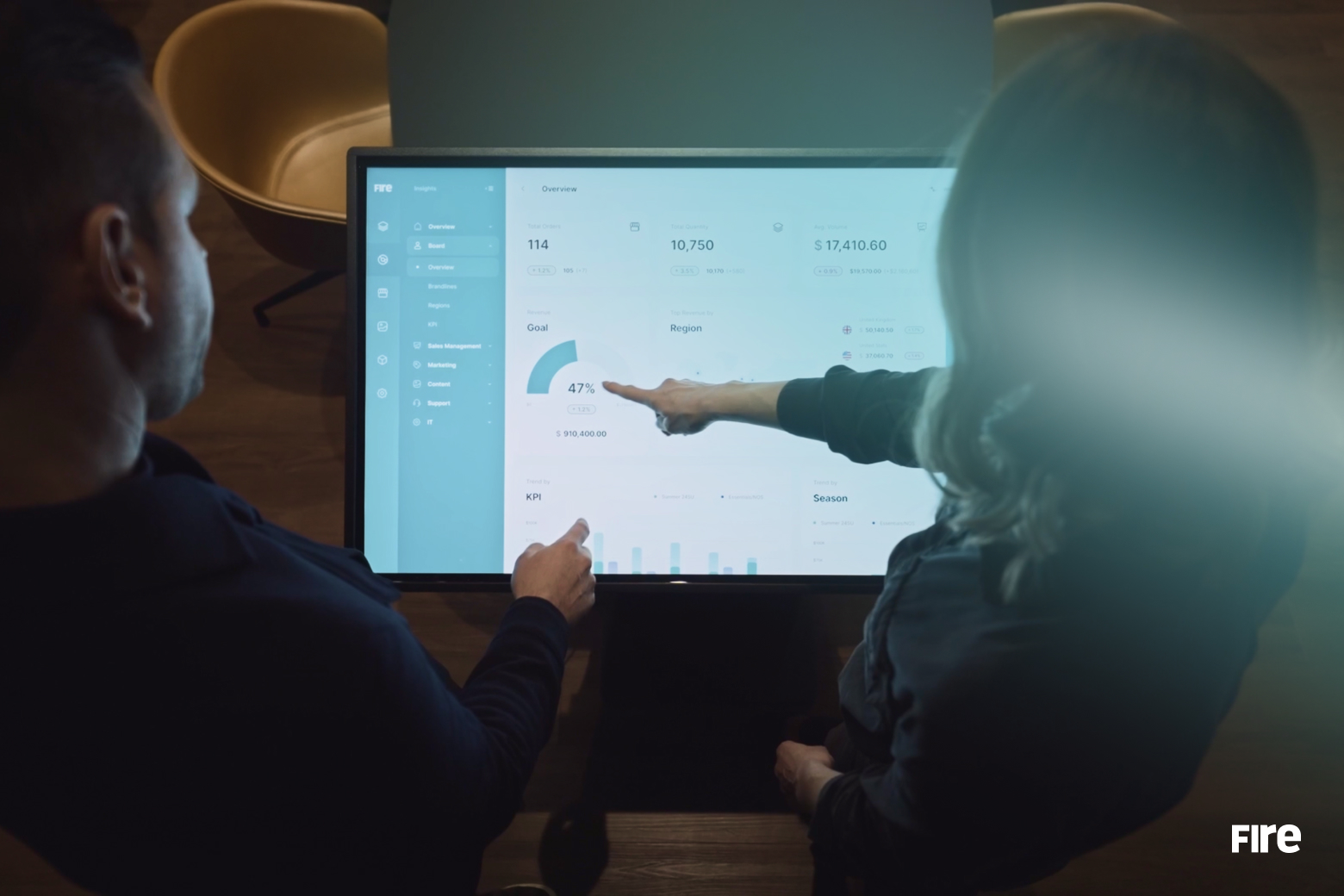
FIRE eliminates data silos architecturally. Every wholesale interaction — from showroom to order to sell-out — happens in one system. Data is born structured. Intelligence is captured automatically.
Why Data Silos Are Fashion's Most Expensive Problem
Data silos cost fashion brands between 15–25% of potential revenue annually. The loss isn't visible on any balance sheet because it manifests as missed opportunities rather than direct costs. A buyer who expressed interest in a product category during a showroom visit — that signal stays trapped in a sales rep's notebook. A sell-out pattern showing regional demand shifts — that intelligence remains locked in a retailer's POS system. A reorder opportunity triggered by fast-moving styles — that data point sits in a spreadsheet no one checks until the season is over.
The compounding effect makes silos even more damaging over time. Every season of siloed data is a season of AI training data lost permanently. Brands that consolidated their data three seasons ago now have predictive models that outperform manual planning by 30–40%. Brands still running fragmented systems cannot retroactively recover the behavioural signals, interaction patterns, and transaction sequences that would have trained their algorithms.
The Technical Reality of Fashion Data Fragmentation
Fashion operates on a uniquely complex data model. A single SKU can exist in 47 size-colour combinations across 12 markets with different pricing, different availability windows, and different competitive dynamics. Multiply that by 3,000 styles per season and you begin to understand why spreadsheets and disconnected tools create chaos rather than clarity.
ERP systems were designed for transactional accuracy, not analytical intelligence. They capture what happened — the order, the shipment, the invoice — but not why it happened. They don't record the 14 products a buyer browsed before selecting three. They don't track the seasonal sell-through velocity that would inform next season's buy. They don't connect the preorder commitment to the reorder behaviour to the final sell-out performance.
This is why platform architecture matters more than any individual feature. When FIRE connects showroom interactions, order management, ERP synchronisation, and sell-out visibility in a single system, every data point is contextualised automatically. The browsing behaviour that preceded the order. The sell-through rate that triggered the reorder. The sell-out pattern that validated the original assortment decision. Each transaction enriches every other transaction.
From Silos to Intelligence: A Practical Roadmap
Breaking down data silos isn't a technology project — it's a strategic transformation. Step one: audit every system that touches wholesale data and map the gaps between them. Step two: identify the highest-value data connections — typically the link between preorder behaviour and sell-out performance. Step three: implement a unified platform that captures data natively rather than integrating it retrospectively. Step four: let the data compound for 2–3 seasons before deploying advanced AI models.
FIRE's implementation timeline of approximately 10 weeks reflects a fundamental architectural advantage: instead of building integrations between existing silos, the platform replaces them. Showroom, ordering, analytics, and ERP connectivity operate as one system from day one. The result: structured, AI-ready data from the first transaction — not after months of data cleaning and normalisation. Brands like Hugo Boss, Bugatti Shoes, Drykorn, and LVMH have made this transition, processing nearly $10 billion in annual wholesale transactions through purpose-built AI architecture (projected estimate).
Industry Benchmarks: The Cost of Silos
Research across fashion brands at various stages of data maturity reveals consistent patterns. Brands with 5+ data silos experience 25–35% higher operational costs in wholesale management compared to brands with unified platforms. They require 3–4x more time for routine analytical tasks. They miss 15–20% of reorder opportunities due to signal latency. And they spend 20–30% of their technology budget on integration maintenance rather than capability advancement.
These benchmarks provide a financial framework for evaluating platform investments. A brand processing $100M in annual wholesale revenue can typically expect $8–15M in combined value from reducing operational costs, capturing missed opportunities, and redirecting technology investment — with the full benefit materialising within 2–3 seasons of platform adoption (projected estimate).
Taking Action: From Insight to Implementation
Understanding the challenge of data silos is the first step. Acting on it is what separates market leaders from followers. The fashion brands that will dominate in 2028–2030 are the ones implementing unified data platforms today — building the structured intelligence foundation that makes AI-driven wholesale operations possible.
FIRE provides the fastest path from fragmented data to unified intelligence: 10 weeks from decision to go-live. Every transaction from day one captures structured, AI-ready data. Every season builds on the last. Within 2–3 seasons, the operational improvements — better forecasts, optimised assortments, reduced samples, faster reorders — generate measurable ROI while simultaneously building the data foundation for increasingly autonomous AI-driven decision-making.
Processing nearly $10 billion in annual wholesale transactions for Hugo Boss, Bugatti Shoes, Drykorn, LVMH and 100+ leading fashion and lifestyle brands worldwide, FIRE demonstrates that the path from data challenges to data-driven competitive advantage is proven, repeatable, and available today. The only variable is when you start — and every season of delay is a season of intelligence permanently lost (projected estimate).