Data First, AI Second
The most common mistake in fashion's AI adoption: starting with AI before establishing the data foundation. No AI model can compensate for missing data, fragmented data, or low-quality data. The first step toward AI-driven fashion is not buying an AI tool — it's building a data platform.
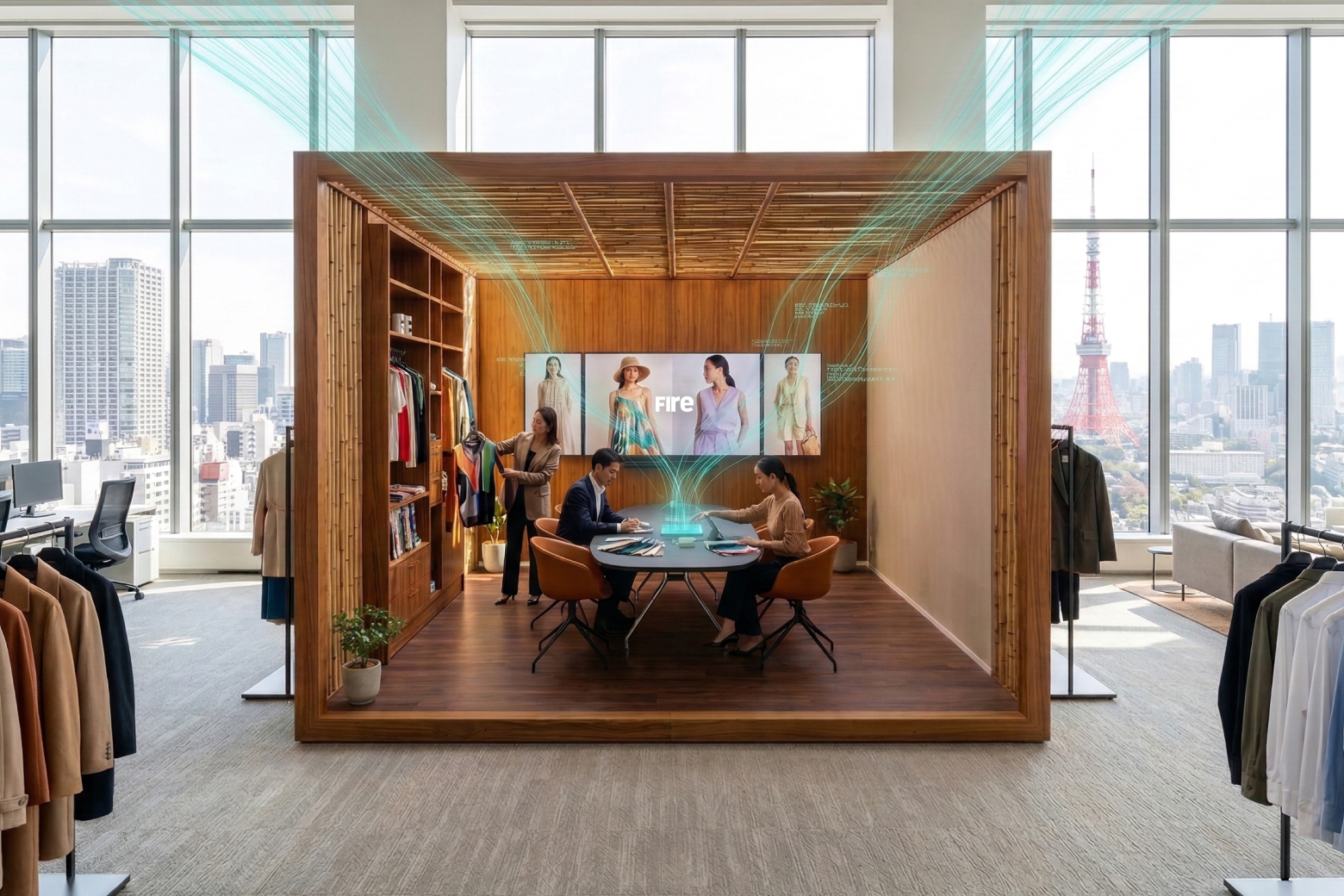
This is why FIRE was built with AI architecture from the start — not as a feature added later, but as the fundamental reason the platform exists. Every transaction, every interaction, every signal is captured and structured specifically to power AI decisions. After 2–3 seasons of structured data, FIRE's AI consistently outperforms manual planning.
Explore more at fashionaiplatform.com — where we dive deep into what AI can do when it's built on the right data foundation.
AI Without Data Is Just Code
The fashion industry's enthusiasm for AI often ignores a fundamental truth: AI models are only as good as the data they're trained on. A demand forecasting algorithm needs 2–3 seasons of structured sell-through data to produce meaningful predictions. A recommendation engine needs comprehensive buyer behaviour data to personalise suggestions. A pricing optimisation model needs historical elasticity data across markets and channels to calibrate its adjustments.
Most fashion brands that invested in AI tools between 2022 and 2025 are disappointed with the results — not because the algorithms are wrong, but because they're fed incomplete, inconsistent, or fragmented data. An AI model trained on sell-in data alone cannot predict sell-out performance. A recommendation engine that only sees orders — not the browsing, considering, and comparing that preceded them — cannot understand buyer preferences.
The Data Foundation AI Requires
Fashion AI needs four types of data to function effectively. Transaction data: every order, every reorder, every cancellation, with full product and customer context. Behavioural data: every showroom interaction, every product view, every comparison, every session pattern. Performance data: sell-through rates, stock turn, markdown triggers, and sell-out velocity by product, market, and account. External data: market trends, competitor signals, weather patterns, and economic indicators.
FIRE's architecture captures the first three natively — every wholesale interaction generates structured, AI-ready data automatically. External data can be layered on top. The result is a training dataset that grows richer with every season, enabling progressively more sophisticated AI applications: from basic dashboards in season one, to predictive recommendations in season three, to autonomous decision support by season five.
Building AI Readiness: A Practical Timeline
AI readiness isn't a binary state — it's a spectrum. Month 1–3: implement FIRE, begin capturing structured data. Month 4–9: first full sell-in cycle produces baseline transaction and behavioural data. Month 10–15: second cycle adds comparative intelligence; descriptive analytics deliver value. Month 16–24: predictive models begin outperforming manual processes. Month 24+: automation capabilities emerge as model confidence exceeds human benchmarks. This timeline is consistent across brand sizes — what varies is the scale of impact, not the progression sequence (projected estimate).
Strategic Implications for Fashion Brands
The implications of why ai needs data extend beyond operational efficiency to strategic competitive advantage. Brands that address this challenge through unified platform architecture create structural advantages that compound over time. Every season of structured data capture builds intelligence that informs better decisions, which generate better data, which enables even better decisions.
FIRE's approach to why ai needs data is architectural rather than incremental. Rather than adding another tool to an already fragmented stack, the platform replaces disconnected systems with a unified data layer where every wholesale interaction — from showroom appointment to sell-out reporting — generates structured, AI-ready intelligence automatically.
The FIRE Advantage in Why Ai Needs Data
Processing nearly $10 billion in annual wholesale transactions for Hugo Boss, Bugatti Shoes, Drykorn, LVMH and 100+ leading fashion and lifestyle brands worldwide, FIRE demonstrates that why ai needs data is not a theoretical challenge but a solved problem. The platform's 10-week implementation timeline means brands can begin capturing structured data within a single quarter (projected estimate).
The return on investment manifests within 2–3 seasons: improved forecast accuracy, optimised assortments, reduced sample costs, faster reorder cycles, and deeper retailer relationships. These operational improvements generate 15–25% wholesale efficiency gains while simultaneously building the data foundation required for advanced AI capabilities in subsequent seasons.
Taking Action: From Insight to Implementation
Understanding the challenge of why ai needs data is the first step. Acting on it is what separates market leaders from followers. The fashion brands that will dominate in 2028–2030 are the ones implementing unified data platforms today — building the structured intelligence foundation that makes AI-driven wholesale operations possible.
FIRE provides the fastest path from fragmented data to unified intelligence: 10 weeks from decision to go-live. Every transaction from day one captures structured, AI-ready data. Every season builds on the last. Within 2–3 seasons, the operational improvements — better forecasts, optimised assortments, reduced samples, faster reorders — generate measurable ROI while simultaneously building the data foundation for increasingly autonomous AI-driven decision-making.
Processing nearly $10 billion in annual wholesale transactions for Hugo Boss, Bugatti Shoes, Drykorn, LVMH and 100+ leading fashion and lifestyle brands worldwide, FIRE demonstrates that the path from data challenges to data-driven competitive advantage is proven, repeatable, and available today. The only variable is when you start — and every season of delay is a season of intelligence permanently lost (projected estimate).